Showing posts with label environmental. Show all posts

Monday, December 17, 2012

Bird of Unparadise

Birds are indicators of the environment. If they are in trouble, we know we'll soon be in trouble.  - Roger Tory Peterson
Man has displayed it's unappreciation for nature, and it's being manifested in the very place we call our home; where we once had luscious forests we now see barren, cold land, where the water flowed and played in the sun to sparkle we now see unclear, clouded, dead water bodies. It is - and should be - of much concern to most in the world, and we've yet to truly be taking action. Even in the fashion world, pervasive to all mankind in the 21st century, so much more can still be done to change our environment. 

In this photography series 'Bird of Unparadise', it basically places a pun on the plant named Bird of Paradise as well as the subject matter aimed at being a representation of a bird. The bird has truly turned into a representative subject matter of nature itself, placing the idea of a dying and struggling environment in a new perspective - artistically and visually. Feast your eyes on the (un)paradise!

This is the bird at the very beginning: determined and like a silent watcher from the trees, fully aware of its surroundings. It is undisturbed yet on guard.

It senses a change - trees being felled and it's home (no, our home) is being destroyed. It spreads its wings, displaying itself from beyond the shadows of the fallen branches.

It mourns for its home. A white cloth draped over as if a funeral is being held.
The body looks like it is supposed to be part of the tree of which the branch had once been part of, but rather no, it is part of the tree itself as a bird.

Angered by its helplessness and Man's tactlessness, it ruffles its feathers in fury.

It wants to escape the predicament set ahead of it by another's irresponsibility, yet it faces confinement for it has nowhere to go to. 
It's home has already been broken.
Bird of Unparadise Series, Jubilee Tai, photography 2012
Yup so that's the end for this photography series, but wait! I have a few artistic shots captured from the rest of the shoot as well which I filtered out initially from the final piece.

I actually think it's(below) quite Vogue worthy :)))
Hindered, Jubilee Tai, photography 2012

A concealed facial shot.
Ethereally unreal, Jubilee Tai, photography 2012

Dead Bird, Jubilee Tai, photography 2012

Camouflage, Jubilee Tai, photography 2012

 Thanks for reading! :)


Monday, March 12, 2012

Writing 04: Andy Goldsworthy

We did a short project, well, in other words, our own take on Andy Goldsworthy. For me, I incorporated a simple concept of a temporal state, and "using what I had in front of me"at that very time. In a school context, I certainly could not uproot plants or make use of the nature around me, so I had another idea...


Carpet on grass!!! I really felt that this was interesting enough as I liked how the bright red of the carpet contrasted with the natural green of the grass, as complementary colours as well. I also was kind of playing with the words in my mind like the relation of the 'carpet' and the 'grass' and then linking to 'carpet grass'. I found that an intriguing concept, and this was furthered by the idea of the carpet as a man made feature against a natural feature.
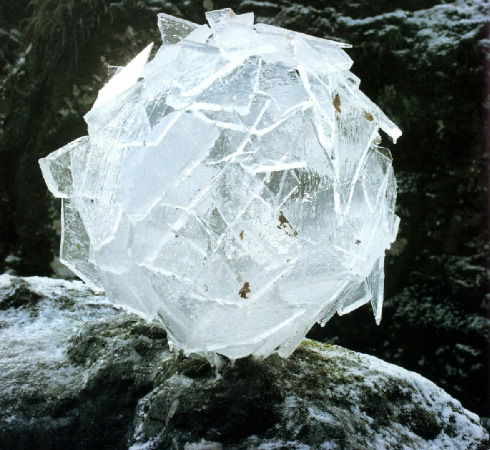
I find this concept of natural versus man-made a concept highlighted in Andy Goldsworthy's work as a well. For example, in this work, 
This ice ball, although made out of a natural element of water, is still constructed through one man's efforts, rather than out of a natural process. In a way, it contradicts itself, by claiming to be an object of nature, but at the same time being something man-made.
Also the concept of being temporal also intrigued me, because I certainly could not leave the carpet on the grass, which was quite sad I have to say because it wasn't as bio-degradable as the ice in Goldsworthy's ice sculptures. That was one of the major shortfalls in my attempt to emulate Goldsworthy's work. His work was temporal because it would later be naturally destroyed, and thus had to be photographed at that precious second in time. However, I had to "destroy" my own work un-naturally...
Personally, I find Andy Goldsworthy's work quite interesting, as it is atypical of what I would usually so-called, define as a piece of art. It opened my eyes to see what art could be , not just paintings or installations, but even further highlighting the process rather than the work itself. It is no longer about the finished artwork, and it can also be just one second of its existence but then again, yes, it can still be defined as art.
To end off, here's a quote that has somewhat opened my eyes a little to the inception of art:
"Not being able to touch is sometimes as interesting as being able to touch." ---Andy Goldsworthy 
Does art truly have to exist only when you're there in that moment? For me at least, no, it doesn't work that way anymore.

Friday, February 24, 2012

Writing 03: Christo and Jeanne Claude

The first I have to say about these two artists is that they're pretty odd. Apparently everytime they travelled overseas, they travelled in separate planes, so just in case one crashed, the other would probably have survived to continue their work. I thought this was pretty funny, but that aside, I'm here to talk about their artworks.
Basically they went around wrapping stuff and such... including one of their most iconic and significant works, none other than:
Wrapped Coast (1968-69)
I found that Christo and Jeanne-Claude's style of art was truly something that was worth exploring and intriguing despite its practically idiot-proof concept of wrapping items, but the environmental art they did had held possible deep meaning to the environment, and the fact that almost all the artworks the couple did together were big scale projects made their art all the more intriguing and appealing.
The temporal state of each project just never fails to remind us about the fragility of life and I truly find that one of the greatest and strongest messages that the couple had communicated through their works. Especially through this incident under their project Valley Curtain:
Christo and Jeanne-Claude's first monumental project in the American landscape,Valley Curtain featured fabric that was non-containing, more dynamic, and freer. An enormous expanse of vivid orange nylon polyamide was installed between two mountains 1,250 feet apart to create an artificial barrier ranging from 182 to 365 feet in height. During the first installation, attempted in 1971, the curtain was damaged irreparably by winds. Christo and Jeanne-Claude quickly retrenched: the curtain and its moorings were redesigned, and engineers monitored wind velocities. The second attempt, executed on 10 August 1972, was successful, but unpredicted gale force winds arose and necessitated the curtain's removal after merely twenty-eight hours.Valley Curtain thus demonstrates the artists' determination to see their ideas through to completion. It also captures the essence of the large-scale projects: the installation is of vital importance, although the duration is finite; and the realized project remains in viewers' memories.
Valley Curtain, Grand Hogback, Rifle, Colorado, 1970-72 

Also, one can certainly tell that the couple was not going around just wrapping things up or installing strange and out-of-place items in random nature areas. They seemed to have a purpose in their art, be it an environmental or social message, they made use of their profession as artists to continue relaying important messages through their sphere of influence and furthering it through their art on an international level. I think this selfless attitude they had which was reflected in their art was what made me look up to them more, and in conclusion I just wanted to say that it's not so much about the artwork itself, it's about the artists and their purposes.